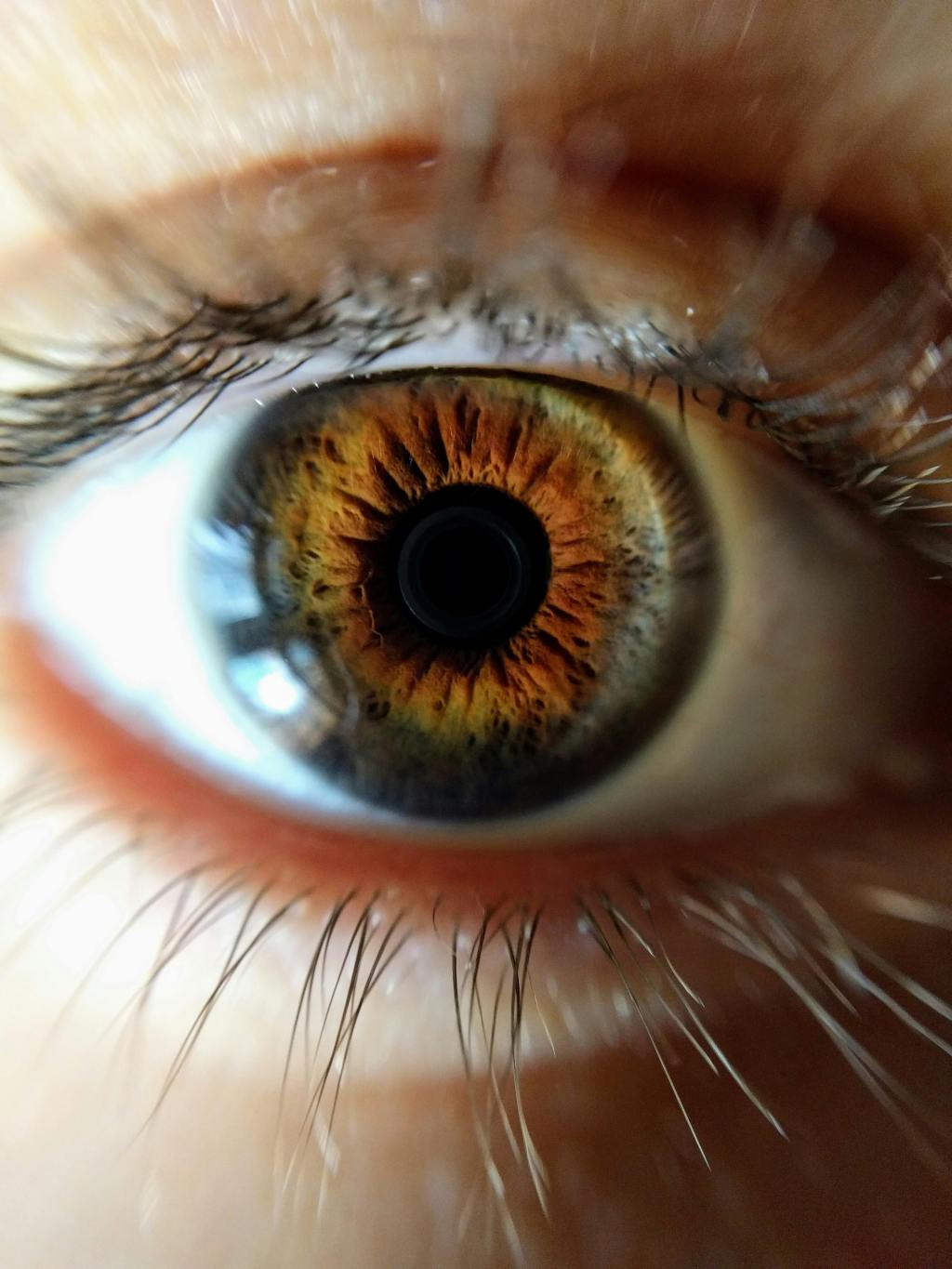
I am sitting in the library. I am being watched. I am a fraud. I am performing intellectualism; a black-square-esque display of superiority over those who stare. I am looking around, and I see nobody.
I am twenty-one years old. For the past thirteen years, I have never been out of reach of my phone for longer than four days. According to The Anxious Generation by Jonathan Haidt, that’s probably not great. Publicly ruminating about getting rid of my phone has led to several loved ones tearfully begging me to keep it in fear that they’ll never see me again. It is not within the realm of imagination for my generation to meaningfully exist in another’s life otherwise. According to The Anxious Generation by Jonathan Haidt, that’s also probably not great.
The Psychonaut Field Manual by Arch-Traitor BlukeFluke provided a series of thought patterns and breathing exercises that made opening one’s third eye trivially easy. The part BlukeFluke doesn’t cover is how to close the damn thing. As a musician, hiker, and human being, I find myself using similar breathwork in my daily life, involuntarily bringing about the sensations typically associated with the third eye. My experience is aptly summarized in a message I sent on April 11, 2025; “I was inspired by some of the psychonaut stuff and I think. I fucked up… I wanted to fix my disassociation so I did some stuff and it worked but it had me collapsing so I tried to put it back and I found something else in my brain and now I’m beyond spent”. As I recovered from this abrupt rewiring, I reflected on the various ways I perceive beyond my body. In this reflection, I found that my “fourth eye” is irrevocably open and so is yours. It’s in your pocket. It’s in your palm. It’s connecting with every other phone near you, providing location, graphical, and fingerprinting data to central silos. I can find the faces, hobbies, loved ones, and locations of countless peers and strangers within seconds, and they can find me. As someone who was born in a world with unrestricted access to the sum of human knowledge, the ramifications of knowing and being known so intimately by strangers has irreversibly extended my generation’s concept of self in ways we can’t begin to comprehend.
I am sixteen years old. I am strictly forbidden from socializing with people my age due to fears of COVID-19. I deliberately angle my morning jog through a George Floyd protest. A group of Marxist-Leninists are chanting for the abolition of nearly everything. I can’t imagine a world beyond borders, let alone one beyond America’s, but I take a pamphlet home and sign up for their newsletter. I receive several notifications on my phone: a COVID-19 close contact; a spike in Asian American hate crimes; an attempt to hit a boat with a train (California, 2020). The public’s imagination bloats with paranoia.
In her essay, Lily Alexandre discusses several odd phenomena in what she classifies as “Public Freakout Videos”. Why, when people are recorded for being hostile in public, do they often pull out their phones and film back? “The altercation is already being recorded, and a second angle probably won’t offer some new info that exonerates them. Why do people respond that way? Because cameras are guns” (Alexandre). Law enforcement’s response to being recorded is a reflection of this reality. You’re legally allowed to film an officer, however, it is very likely they will find an excuse to retaliate with force if you’re caught. When your likeness is taken (as photos are), you lose your ability to represent yourself in any contradictory way. Consider; if someone has a photo of you doing something, no volume of witnesses or alibis will compare to the evidential power of a second photo. Photography is not the only way our likeness is taken from us; every time you use the internet, advertisement agencies build an increasingly granular image of your passions, motivations, and soul. This mechanism floods cheap mobile games with thinly veiled porn advertisements, funnels prospective gamblers into casinos they’re inextricably bound to, and pushes vapes onto the youngest of consumers. This is an act of violence against how we imagine ourselves and our future.
I am eleven years old. A boy barely older than me “was interrogated, suspended, and fingerprinted for constructing a clock inside his pencil case. He used a small circuit board, power supply and digital display, inventively transforming the case. Dismayingly, his teacher and principal suspected the clock of being a bomb. Through the distorting fun-house mirrors of white supremacy and anti-Muslim hatred, he was deemed guilty instead of gifted, threatening instead of talented” (Benjamin, 6). His imagination was tainted by hope, and those in charge imagined they were divinely ordained through media fearmongering to bring state violence upon him for such a transgression.
Jonathan Haidt gives children as much autonomy as society does; which is to say he views children as property (Haidt, 235). As someone who was recently property, his perspective on the effects of childhood phone use lacks the cosmic horror it deserves. Ask anybody who wouldn’t remember 9/11 what follows “Hurricane Katrina? More like…” and you will get a homogenous answer due directly to the emergence of short-form video platforms that have entirely captured our imaginations. Worse, our imaginations are manufactured: every Paw Patrol episode a copaganda piece; every Instagram boycott a dilution of radical action; every tragedy a subliminal and insidious call for apathy.
I am six years old, in the playground at my elementary school. My friends and I are lugging around imaginary heaps of DSs. The portable dual-screen gaming platform is the only shape of play we’re reliably able to access. I ask my friends if any of them feel more like girls than boys. No one has the words to discuss it, but one of them mentions how they heard Lady Gaga was a man. We eat sand in relative silence as the Deepwater Horizon explosion dumps 4.9 million barrels of oil into the Gulf of Mexico.
I am sitting in the library. A man has sat down four paces from me. My gut and soul and heart and bones and flesh ache to utterly rend him from obscurity. There is, for the first time in my life, no record of this transaction.
Sources:
Haidt, J. (2024). The Anxious Generation: How the Great Rewiring of Childhood Is Causing an Epidemic of Mental Illness. Penguin Press.
California. (2020, April 1). Train operator at Port of Los Angeles charged with derailing locomotive near U.S. Navy’s hospital ship mercy. Central District of California | Train Operator at Port of Los Angeles Charged with Derailing Locomotive Near U.S. Navy’s Hospital Ship Mercy | United States Department of Justice. https://www.justice.gov/usao-cdca/pr/train-operator-port-los-angeles-charged-derailing-locomotive-near-us-navy-s-hospital
Alexandre. L, (2025). The Psychic Burden of Being Watched. Self-produced.
Blukefluke, A.T. (31 July, 2023). The Psychonaut Field Manual (3.5)
Benjamin, R. (2025). Imagination: A manifesto. WW Norton.
Photo by R. Swafford: https://www.pexels.com/photo/human-eye-closeup-photo-801867/
 Tech Talk: No Holds Barred
Leave a comment